Discussion Questions (week 9)
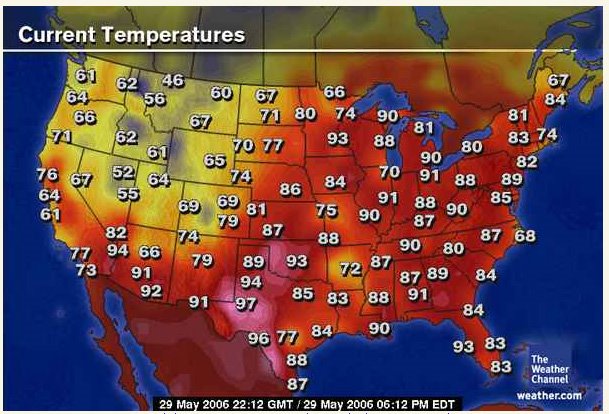 Here are a few discussion questions for this week. Answer as many or as few as needed to get some ideas down in note form:
- How might "weather" be defined (by you/the dictionary/Wikipedia)? Are there multiple and distinct definitions? What does "the weather" mean to you? What personal associations do you make with the concept of weather? With the phrase "the weather" (as a piece of language)? How is the weather commonly understood/discussed/thought of/observed/represented scientifically? socially? in pop-culture? politically? Has our conception of/relationship to the weather always been the same throughout history (don't bother with research, but make a conjecture)?
- What's immediately noticeable about the Lisa Robertson's The Weather? What's interesting/commendable about the book? What's uninteresting? What's not immediately obvious but observable over time/after reflection? Can you describe or make observations on the style of the book? the form of the book? What kind of information is Lisa Robertson presenting us with in The Weather? What kind of vocabulary/diction? How is information/tone/language presented to us in the book? organized? What's the overall tone of the book? Does that tone change throughout or is it constant?
- Relate your responses to the first two sets of questions together. How does the title relate to the book's style? to the book's content? the book's form? How does the title affect how you read/make meaning of the book? How does the book change or augment your associations with weather?
- Given the publication date, what social/cultural/national/personal/historical/political events or relationships (contexts) might expand or illuminate our understanding of what the book is doing? (I'm not asking you to find allusions in the book, but rather, asking you to reflect on the social/cultural/etc. landscape of the last five years as a way of contextualizing Robertson's writing strategies or how the book continues to be meaningful today - that is, how does this book reflect/react to/question/relate to the cultural contexts which surround its production & presentation).
posted by Carton Tragedy at 1:06 AM


0 Comments:
Post a Comment
<< Home